

Tortoises are among the longest-living pets in the world. With proper care, many species can live for 50 to over 100 years, making them lifelong companions that may even outlive their owners. Understanding each stage of a tortoise’s life—and recognizing the signs of good health—can help ensure your shelled friend enjoys a long, active, and healthy life. Shop now
| Health | Lifecycle |
|---|---|
| ✔ Provide proper UVB lighting and calcium | ✔ Hatchlings require extra warmth and humidity |
| ✔ Feed a balanced, species‑appropriate diet | ✔ Juveniles grow steadily over several years |
| ✔ Schedule regular health checks | ✔ Adults need consistent nutrition and exercise |
| ✔ Watch for early signs of illness | ✔ Seniors benefit from closer monitoring |
| ✔ Maintain a clean, stress‑free habitat | ✔ Many tortoises can live 50–100+ years
|
Key Takeaway: Most tortoise health problems are preventable with proper nutrition, lighting, temperature, hydration, and routine observation.
Unlike many pets, tortoises mature slowly and can remain active for decades. Each life stage comes with different care requirements.
The first years of life are critical for healthy shell and bone development.
Young tortoises grow quickly, so regular weight checks are recommended to monitor healthy development.
Juvenile tortoises become more active and curious as they continue growing.
Continue providing a varied, high-fiber diet and opportunities for exercise.
Adult tortoises typically require less rapid growth support but still depend on consistent care.
Daily priorities include:
Many species remain active and healthy for decades when properly cared for.
As tortoises age, they may become less active and require closer observation.
Older tortoises may benefit from:
Although they may slow down, many senior tortoises continue to live healthy lives with appropriate care.
| Condition / Topic | Details |
|---|---|
| Metabolic Bone Disease (MBD) | Often caused by insufficient UVB lighting or calcium deficiency. |
| Symptoms (MBD) | Soft shell; Misshapen shell growth; Weak legs; Difficulty walking; Tremors |
| Prevention (MBD) | High‑quality UVB lighting; Calcium supplementation; Proper diet |
| Respiratory Infections | Linked to low temperatures or poor husbandry. Maintaining correct enclosure temperatures reduces risk. |
| Symptoms (Respiratory) | Wheezing; Open‑mouth breathing; Nasal discharge; Swollen eyes; Reduced appetite |
| Shell Problems | A healthy shell should feel firm and smooth. Minor injuries require monitoring; serious damage needs veterinary care. |
| Signs (Shell) | Soft spots; Cracks; Foul odor; Discoloration; Shell rot |
| Parasites | Internal/external parasites common outdoors. Routine fecal exams help detect early. |
| Signs (Parasites) | Weight loss; Diarrhea; Poor appetite; Low energy |
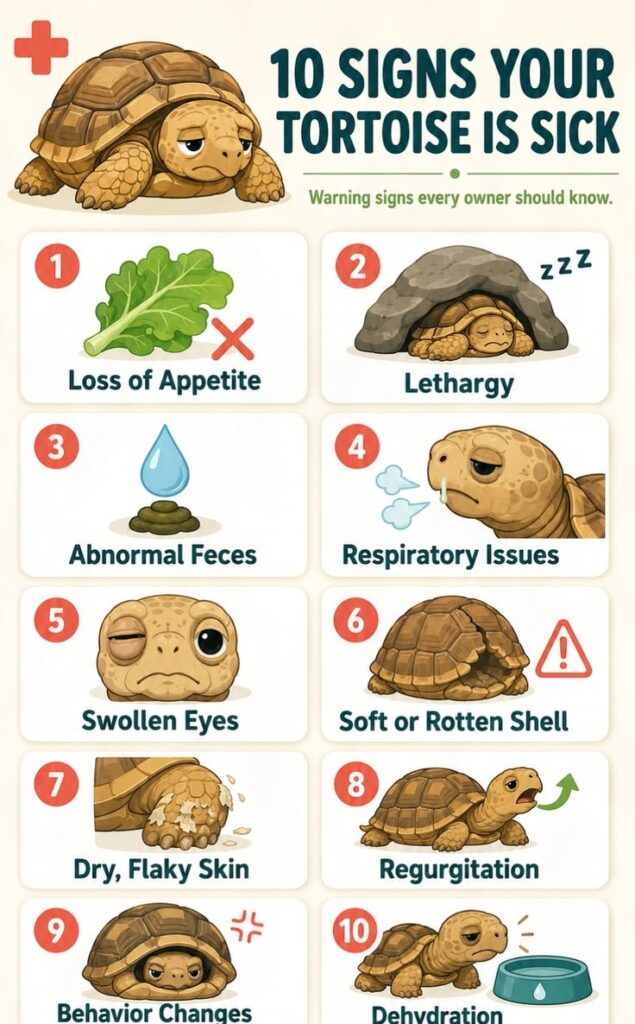
| Signs of a Healthy Tortoise | Eats consistently; Basks regularly; Walks with strong, steady movements; Bright, clear eyes; Firm, normal droppings; Hard, smooth shell; Shows curiosity and natural behaviors |
| Warning Signs | Loss of appetite (several days); Rapid weight loss; Swollen/closed eyes; Persistent lethargy; Difficulty breathing; Soft shell; Blood in droppings; Difficulty walking; Unusual swelling/discharge |
| Preventive Health Checklist | Every Day: Provide fresh food; Replace water; Check UVB/heat lamps; Observe behavior/appetite; Spot‑clean enclosure Every Week: Weigh tortoise; Clean dishes; Inspect shell/skin; Refresh substrate Every Year: Replace UVB bulbs; Schedule wellness exam; Review enclosure size |
Passion, expertise, and compassion at the heart of everything we do, guiding responsible ownership and lifelong care for every tortoise and turtle.